


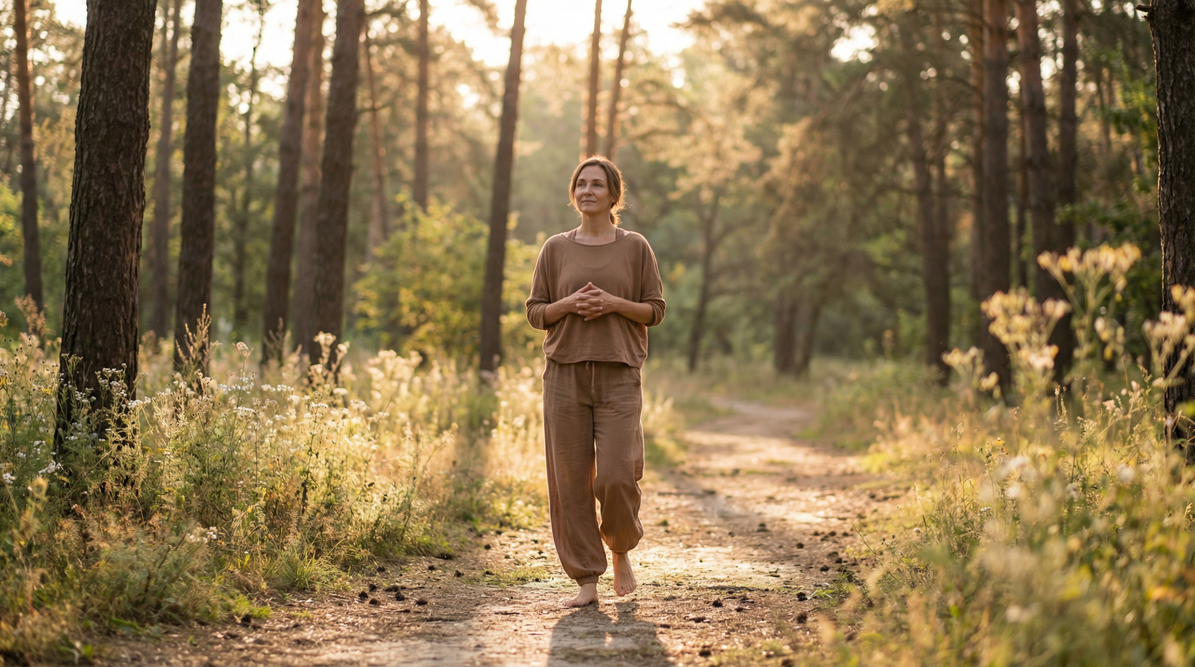
Walking yoga is a mindful movement practice that combines the principles of yoga—breathwork, gentle stretches, and mindfulness—with the simple act of walking. With a remarkable 2,414% increase in search interest in 2025, walking yoga has emerged as one of the most popular wellness trends for people seeking stress relief and gentle exercise. This complete guide teaches you how to start walking yoga today, even if you’ve never practiced yoga before.
What Is Walking Yoga?
Walking yoga is a form of moving meditation that blends mindful walking with yoga principles. Unlike traditional yoga performed on a mat, walking yoga happens in motion—outdoors in nature, around your neighborhood, or even indoors on a track. The practice focuses on breath awareness, intentional movement, and present-moment attention.
According to Yoga Journal, walking yoga creates a type of moving meditation that supports flexibility, focus, and stress relief. It’s particularly appealing to people who find traditional seated meditation difficult or who want to combine their exercise time with mindfulness practice.
If you’re new to fitness, walking yoga pairs beautifully with setting realistic fitness goals since it’s gentle enough for any starting point.
Why Is Walking Yoga Trending in 2025?
According to PureGym’s annual fitness report, walking yoga searches increased by 2,414% in 2025. This explosive growth reflects several cultural shifts:
- Mental health focus: Growing awareness of anxiety and stress management
- Low-impact preference: Shift away from high-intensity workouts
- Time efficiency: Combines exercise and meditation in one practice
- Accessibility: No equipment, gym, or yoga experience needed
- Nature connection: Encourages outdoor movement and fresh air
- Gentle approach: Suitable for all ages and fitness levels
PureGym’s marketing director noted that people are moving toward softer versions of fitness that consider the changing needs of our bodies and schedules. Walking yoga perfectly embodies this shift.
Benefits of Walking Yoga
1. Reduces Stress and Anxiety
The combination of rhythmic walking, deep breathing, and mindful awareness activates your parasympathetic nervous system. According to Harvard Health, this “rest and digest” response counteracts stress hormones and promotes calmness.
2. Improves Flexibility and Mobility
Walking yoga incorporates gentle stretches and mindful movements that gradually increase your range of motion. Over time, you’ll notice improved flexibility in your hips, hamstrings, and spine.
3. Enhances Mental Clarity
The mindfulness component of walking yoga trains your brain to focus on the present moment. Regular practice can improve concentration, reduce mental fog, and enhance decision-making abilities.
4. Supports Joint Health
Unlike running or jumping exercises, walking yoga is extremely gentle on your joints. The slow, deliberate movements lubricate joints and strengthen surrounding muscles without impact stress.
5. Boosts Mood Naturally
Combining outdoor walking with breathwork increases oxygen flow to your brain and triggers endorphin release. Many practitioners report feeling happier, more optimistic, and emotionally balanced after sessions.
6. Improves Sleep Quality
The stress-reducing effects of walking yoga help calm an overactive mind at bedtime. Practicing in the morning or afternoon can regulate your circadian rhythm for better sleep at night.
7. Accessible to Everyone
Unlike traditional yoga that may require flexibility or strength, walking yoga meets you exactly where you are. Age, fitness level, and physical limitations rarely prevent participation.
Dealing with post-workout tightness? Learn 7 tips to reduce soreness after exercise.
How to Do Walking Yoga: Complete Beginner’s Guide
Step 1: Choose Your Environment
Select a peaceful location where you can walk slowly without obstacles or interruptions. Ideal settings include:
- Quiet park paths or nature trails
- Beach shorelines
- Your backyard or garden
- Indoor tracks during bad weather
- Quiet neighborhood streets early morning
Avoid busy areas with traffic, crowds, or loud noises that disrupt your mindful focus.
Step 2: Set Your Intention (2 Minutes)
Before you begin walking, stand still for a moment. Close your eyes and take 5 deep breaths. Set a simple intention for your practice, such as:
- “I walk to release stress”
- “I move with gratitude for my body”
- “I breathe in calm, breathe out tension”
- “I am present in this moment”
This mental preparation shifts your brain from “doing mode” to “being mode.”
Step 3: Begin Mindful Walking (10-20 Minutes)
Start walking at a pace slower than your normal speed. Focus on each element of the walking movement:
Feet awareness:
- Notice your heel touching the ground first
- Feel the roll through your foot to the toes
- Sense the push-off as your foot lifts
- Observe the swing phase as your leg moves forward
Breath coordination:
- Inhale slowly for 4 steps
- Exhale slowly for 4 steps
- Keep breathing rhythmic and natural
- Never force or strain your breath
Body awareness:
- Keep shoulders relaxed and dropped
- Allow arms to swing naturally
- Maintain soft, slightly bent knees
- Hold your head balanced over your spine
Step 4: Add Standing Yoga Poses (5-10 Minutes)
Periodically stop walking to perform gentle standing yoga poses. Hold each pose for 5-10 breaths before continuing your walk.
Mountain Pose (Tadasana):
- Stand with feet hip-width apart
- Ground evenly through all four corners of each foot
- Lengthen your spine toward the sky
- Relax shoulders away from ears
- Breathe deeply for 5-10 breaths
Standing Forward Fold (Uttanasana):
- From mountain pose, hinge at your hips
- Let your upper body hang toward the ground
- Bend knees slightly if needed
- Let your head and neck relax completely
- Hold for 5-10 breaths
Tree Pose (Vrksasana):
- Stand on one leg, place other foot on ankle or calf
- Never place foot directly on knee joint
- Bring hands to heart center or overhead
- Focus gaze on a fixed point for balance
- Hold 5 breaths, then switch sides
Warrior I (Virabhadrasana I):
- Step one foot back into a lunge position
- Front knee bends over ankle
- Back foot angles slightly outward
- Raise arms overhead
- Hold 5 breaths, switch sides
Step 5: Practice Walking Meditation (5-10 Minutes)
Resume walking at an even slower pace than before. This segment focuses purely on meditation:
- Walk as slowly as possible while maintaining balance
- Count each step from 1 to 10, then restart
- If your mind wanders, gently return focus to counting
- Notice sounds, smells, and sensations without judgment
- Maintain soft, steady breathing throughout
Step 6: Close Your Practice (3-5 Minutes)
Find a comfortable spot to stand or sit. Close your eyes and take several deep breaths. Reflect briefly on your practice:
- Notice how your body feels compared to when you started
- Acknowledge any mental clarity or calmness
- Express gratitude for the time you dedicated to yourself
- Set an intention to carry this peace into your day
Learning to listen to your body during workouts enhances every walking yoga session.
Walking Yoga 4-Week Beginner Schedule
| Week | Sessions | Duration | Focus |
|---|---|---|---|
| Week 1 | 3 times | 15 minutes | Breath awareness + slow walking only |
| Week 2 | 4 times | 20 minutes | Add 2-3 standing poses |
| Week 3 | 4 times | 25 minutes | Add walking meditation segment |
| Week 4 | 5 times | 30 minutes | Full practice with all elements |
Walking Yoga vs. Traditional Yoga
| Aspect | Traditional Yoga | Walking Yoga |
|---|---|---|
| Location | Indoors on a mat | Outdoors in nature |
| Equipment | Yoga mat, blocks, straps | Just comfortable shoes |
| Flexibility required | Some poses need flexibility | Accessible to all levels |
| Cardio benefit | Minimal | Moderate (from walking) |
| Mental health | Excellent | Excellent + nature exposure |
| Time needed | 45-90 minutes typical | 15-30 minutes effective |
| Learning curve | Moderate | Very easy |
Best Times to Practice Walking Yoga
Morning Practice (Recommended)
Early morning walking yoga sets a calm, focused tone for your entire day. Benefits include:
- Quieter environment with fewer distractions
- Fresh morning air enhances breathwork
- Gentle movement wakes up your body naturally
- Sets positive intentions before daily stress begins
- Morning light helps regulate sleep cycles
Lunch Break Practice
A midday walking yoga session can reset your mental state:
- Breaks up sedentary work hours
- Reduces afternoon energy slumps
- Clears mental fog for better afternoon productivity
- Provides healthy alternative to screen time
Evening Practice
Walking yoga before dinner helps transition from work to relaxation:
- Releases accumulated daily stress
- Prepares body and mind for restful sleep
- Provides gentle movement after sitting all day
- Creates buffer between work and personal time
Tips for a Better Walking Yoga Practice
Dress Comfortably
Wear loose, breathable clothing that doesn’t restrict movement. Choose supportive walking shoes with good cushioning. Dress in layers if weather is unpredictable.
Leave Your Phone Behind
If possible, leave your phone at home or keep it on airplane mode. Notifications and the temptation to check messages disrupts mindful presence.
Start Shorter Than You Think
Begin with just 10-15 minutes. A short, focused practice beats a long, distracted one. You can always extend duration as the habit solidifies.
Walk Slower Than Normal
The goal isn’t exercise speed—it’s mindful awareness. Walk at roughly half your normal pace, or even slower during meditation segments.
Embrace Imperfection
Your mind will wander—this is completely normal. The practice isn’t about perfect focus but about noticing when you’ve drifted and gently returning attention.
Protect Your Skin
Since walking yoga happens outdoors, remember to protect your skin from cold weather in winter or apply sunscreen in sunny conditions.
Who Should Try Walking Yoga?
Walking yoga benefits almost everyone, but it’s especially valuable for:
- Stress sufferers: Those dealing with anxiety, overwhelm, or chronic stress
- Meditation beginners: People who struggle with seated meditation
- Office workers: Anyone who sits for extended periods daily
- Older adults: Gentle movement that supports joint health
- Injury recovery: Low-impact option during rehabilitation
- Yoga newcomers: Accessible introduction to yoga principles
- Busy people: Those who want exercise and meditation combined
- Nature lovers: Anyone who feels recharged by outdoor time
Ready to try other gentle exercises? Explore what to consider when choosing a gym with beginner-friendly classes.
Common Walking Yoga Mistakes to Avoid
- Walking too fast: This isn’t a cardio workout—slow down significantly
- Skipping breath awareness: Breathwork is essential, not optional
- Choosing distracting locations: Busy streets or crowded areas break focus
- Wearing headphones: Music or podcasts prevent present-moment awareness
- Rushing through poses: Hold each standing pose long enough to feel benefits
- Judging wandering thoughts: Mental drifting is normal—just redirect gently
- Practicing only when stressed: Consistency builds lasting benefits
- Expecting instant results: Give yourself 2-3 weeks to feel the effects
How to Progress Your Walking Yoga Practice
Once you’ve established a basic practice, deepen your experience:
- Extend duration: Progress from 20 to 30 to 45 minutes
- Add more poses: Learn additional standing yoga poses
- Try different locations: Beaches, forests, mountains, gardens
- Practice in silence: Go without any internal narration
- Walk barefoot: On grass or sand for grounding benefits
- Join a group: Find walking meditation or yoga hiking groups
- Explore traditions: Learn about Buddhist walking meditation or Zen kinhin
Walking Yoga for Specific Goals
For Stress Relief
Focus heavily on breathwork. Use extended exhales (inhale 4 counts, exhale 6-8 counts) to activate your relaxation response. Choose the most peaceful location available.
For Better Sleep
Practice in the late afternoon or early evening, at least 2 hours before bed. Emphasize slow movements and calming poses. Avoid energizing warrior poses close to bedtime.
For Improved Focus
Emphasize the counting meditation segment. Practice bringing your wandering mind back to focus repeatedly—this builds concentration like a muscle.
For Physical Flexibility
Include more standing poses and hold them longer (10-15 breaths each). Add gentle hip openers and hamstring stretches to your routine.
Frequently Asked Questions
Do I need yoga experience for walking yoga?
No, walking yoga is perfect for complete beginners. The poses are simple standing positions, and the walking component is natural to everyone. No flexibility or prior experience required.
How is walking yoga different from just taking a walk?
Regular walking is often done on autopilot while thinking about other things. Walking yoga involves deliberate breath awareness, extremely slow pace, mindful attention to each step, and intentional yoga poses. The mental component transforms simple walking into a meditative practice.
Can I practice walking yoga indoors?
Yes, you can practice walking yoga indoors by walking slowly around a room, down a hallway, or on an indoor track. However, outdoor practice offers additional benefits from fresh air, natural light, and nature exposure.
How long until I notice benefits from walking yoga?
Many people feel calmer immediately after their first session. Consistent practitioners typically notice reduced stress levels, improved focus, and better sleep within 2-3 weeks of regular practice (3-4 times weekly).
What if I can’t balance in tree pose?
Keep your toes on the ground and just rest your heel against your standing ankle. You can also practice near a tree or wall for support. Balance improves with regular practice—be patient with yourself.
Can walking yoga help with weight loss?
Walking yoga burns fewer calories than vigorous exercise, but it supports weight management by reducing stress hormones (which contribute to weight gain) and building mindful eating awareness. It’s best combined with other activities for weight loss goals.
Is walking yoga safe during pregnancy?
Walking yoga is generally safe and beneficial during pregnancy, but always consult your healthcare provider first. Avoid deep forward folds in later trimesters and modify poses as needed for comfort and balance.
The Bottom Line
Walking yoga offers a gentle yet powerful way to reduce stress, improve flexibility, and cultivate mindfulness—all without complicated poses, expensive equipment, or gym memberships. The 2,414% surge in popularity reflects our collective need for accessible wellness practices that calm the mind while moving the body.
Start with just 15 minutes, three times per week. Focus on slow, deliberate steps coordinated with your breath. Add simple standing poses as you become comfortable. Within a few weeks, you’ll likely notice reduced stress, improved focus, and a deeper connection to your body.
The beauty of walking yoga lies in its simplicity. You already know how to walk. You already know how to breathe. Walking yoga simply invites you to do both with full, present attention—and that small shift can transform your entire relationship with exercise and self-care.
Ready to explore more beginner-friendly workouts? Learn what to bring to the gym for your first time when you’re ready to expand your fitness journey.
