


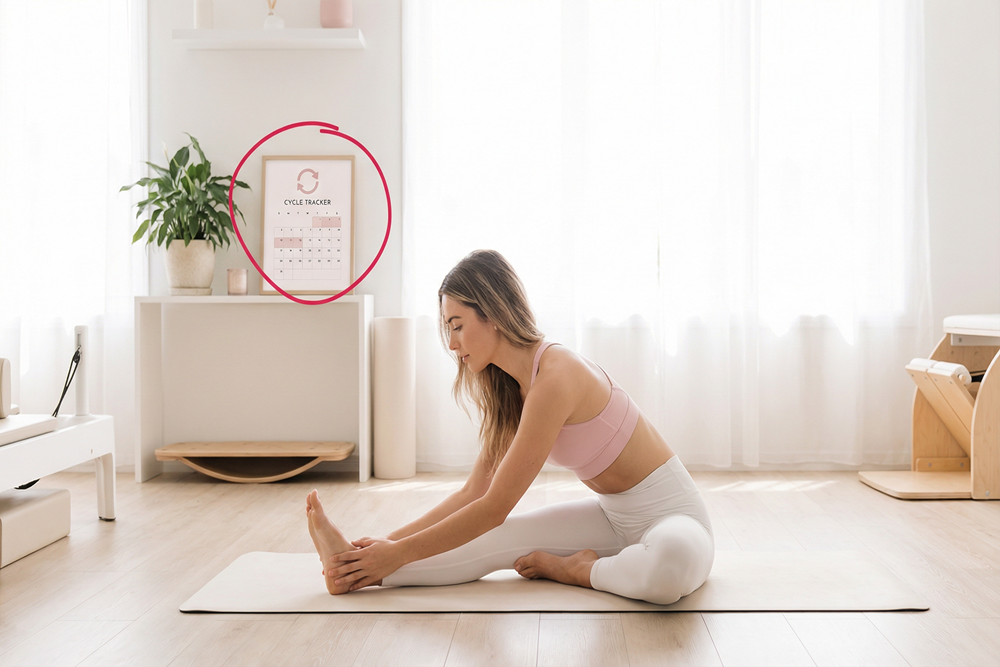
Cycle syncing workouts are exercises strategically planned around the four phases of your menstrual cycle to optimize energy, performance, and recovery. This trending fitness approach has seen a 1,484% increase in global search interest, with over 14.7 million TikTok results. In this guide, you’ll learn exactly how to match your cycle syncing workouts to each hormonal phase for better results.
What Are Cycle Syncing Workouts?
Cycle syncing workouts involve adapting your exercise routine to align with the hormonal fluctuations that occur throughout your menstrual cycle. According to Les Mills research, approximately 75% of female athletes experience negative side effects from their menstrual cycle, and 79% of women take a day off exercise when their period starts.
The concept was popularized by functional nutritionist Alisa Vitti and has gained traction among professional athletes. England Lioness Lucy Bronze credits this approach as instrumental to her performance, stating there’s a phase in her cycle when she’s physically capable of doing more.
If you’re new to fitness, check out our guide on realistic fitness goals for beginners before starting your cycle syncing journey.
The 4 Phases of Your Menstrual Cycle
Understanding each phase is essential for effective cycle syncing workouts. The average cycle lasts 28 days, though McMaster University research shows only about 12% of women have a consistent 28-day cycle.
Phase 1: Menstrual Phase (Days 1-5)
This phase begins on the first day of your period. Hormone levels (estrogen and progesterone) are at their lowest, often resulting in lower energy, fatigue, and cramping.
Energy level: Low to moderate
Best cycle syncing workouts: Rest, gentle yoga, walking, stretching
Phase 2: Follicular Phase (Days 6-14)
After your period ends, estrogen rises as your body prepares to release an egg. This is your “push” period with increased energy levels.
Energy level: High and increasing
Best cycle syncing workouts: HIIT, strength training, challenging cardio
Phase 3: Ovulation Phase (Days 15-17)
Ovulation occurs when estrogen peaks. This 2-3 day window is when most women feel strongest. Testosterone also peaks, enhancing muscle-building potential.
Energy level: Peak performance
Best cycle syncing workouts: High-intensity training, personal records, competitive sports
Phase 4: Luteal Phase (Days 18-28)
After ovulation, progesterone rises while estrogen decreases. Many women experience PMS symptoms during this phase.
Energy level: Moderate, then declining
Best cycle syncing workouts: Pilates, swimming, moderate strength training, yoga
How to Start Cycle Syncing Workouts: Step-by-Step
Step 1: Track Your Cycle for 2-3 Months
Use a period tracking app like Clue, Flo, or Apple Health to log your cycle start date, symptoms, energy levels, and mood daily.
Pro tip: Note how you feel during workouts each day. This personal data is more valuable than generic recommendations.
Step 2: Plan Your Cycle Syncing Workouts Calendar
Once you know your patterns, map out your monthly schedule:
Menstrual Phase Workouts (Days 1-5):
- Focus on gentle movement and recovery
- Restorative yoga or light stretching for 20-30 minutes
- Walking at a comfortable pace
- Light swimming or water aerobics
- Rest if needed
Follicular Phase Workouts (Days 6-14):
- Increase workout intensity gradually
- Start or progress strength training programs
- Try new workout classes
- Add HIIT sessions 2-3 times per week
- Focus on building muscle and endurance
Need ideas for your first gym session? Read our post on what to bring to the gym for your first time.
Ovulation Phase Workouts (Days 15-17):
- Schedule your most challenging workouts
- Attempt personal records in lifting
- Take on high-intensity group classes
- Engage in competitive activities
- Push your limits during this peak window
Luteal Phase Workouts (Days 18-28):
- Maintain moderate intensity
- Continue strength training with lighter weights, higher reps
- Incorporate more Pilates and yoga
- Focus on form over intensity
- Gradually decrease intensity approaching menstruation
Step 3: Adjust Nutrition for Each Phase
Your nutritional needs change throughout your cycle:
Menstrual Phase: Iron-rich foods (leafy greens, red meat, legumes) plus anti-inflammatory foods like ginger and turmeric.
Follicular Phase: Increase protein for muscle building. Include complex carbohydrates for sustained energy.
Ovulation Phase: High protein plus fiber-rich foods to support estrogen metabolism.
Luteal Phase: Magnesium-rich foods (dark chocolate, nuts, seeds) for PMS relief. B vitamins for mood stability.
Step 4: Listen to Your Body
According to Women’s Health, 87% of women who cycle sync report positive results. However, experts emphasize listening to your body rather than following rigid rules.
Feeling sore after workouts? Check our guide on 7 tips to reduce soreness after exercise.
Cycle Syncing Workouts Schedule Template
| Phase | Days | Workout Focus | Example Routine |
|---|---|---|---|
| Menstrual | 1-5 | Rest & Recovery | Yoga, walking, stretching |
| Follicular | 6-14 | Build & Progress | Strength training, HIIT, cardio |
| Ovulation | 15-17 | Peak Performance | Heavy lifting, intense classes, PRs |
| Luteal | 18-28 | Maintain & Moderate | Pilates, moderate weights, swimming |
Benefits of Cycle Syncing Workouts
- Better performance: Training with your hormones leads to improved results
- Reduced burnout: Rest when your body needs it prevents overtraining
- Improved recovery: Timing intense workouts optimizes healing
- Greater body awareness: Understanding your cycle improves overall health
- Reduced PMS symptoms: Appropriate exercise may help manage symptoms
- Sustainable routine: Working with natural rhythms makes exercise enjoyable
What Science Says About Cycle Syncing Workouts
According to a 2023 Frontiers systematic review, research on hormonal fluctuations and exercise performance is still evolving. A 2025 McMaster University study found no significant difference in muscle response during different cycle phases.
However, many women report subjective benefits from cycle syncing workouts. The key is listening to your body while using the framework as a guide.
Best Apps for Cycle Syncing Workouts
- Clue: Comprehensive period tracking with symptom logging
- Flo: AI-powered predictions and health insights
- MyFLO: Created by Alisa Vitti specifically for cycle syncing
- Fitr Woman: Focuses on strength training and menstrual cycles
- Wild.AI: AI-powered personalized training recommendations
Common Mistakes to Avoid
- Being too rigid: Your cycle varies month to month—stay flexible
- Ignoring body signals: If you feel energetic during your period, work out harder
- Skipping workouts entirely during menstruation: Light movement helps cramps
- Not tracking long enough: Give yourself 2-3 months of data
- Comparing yourself to others: Every woman’s response is unique
- Forgetting nutrition and sleep: These matter as much as exercise timing
Learn how to listen to your body during workouts for better results.
Frequently Asked Questions
Can I do cycle syncing workouts with irregular periods?
Yes, focus on body signals rather than strict day counting. Apps like Clue help identify patterns even with irregular cycles.
Do cycle syncing workouts work on birth control?
Hormonal birth control suppresses natural fluctuations, so traditional cycle syncing may not apply. However, you can still adjust based on how you feel.
How long until I see results from cycle syncing workouts?
Most women notice improved energy within 2-3 cycles. Physical changes typically appear after 8-12 weeks of consistency.
Should I avoid intense exercise during my period?
Not necessarily. Some women feel fine with regular routines. The key is listening to your body rather than following strict rules.
Can cycle syncing workouts help with weight loss?
Cycle syncing alone isn’t a weight loss method, but optimizing workouts for your hormones may improve overall fitness results when combined with proper nutrition.
The Bottom Line
Cycle syncing workouts help you exercise in harmony with your body’s natural rhythms. While scientific evidence is still evolving, many women find that this approach improves energy, recovery, and workout enjoyment.
Start by tracking your cycle for 2-3 months, notice how you feel during each phase, and gradually adjust your intensity. Remember that every woman is different—use these guidelines as a starting point and customize based on your experience.
Ready to start your fitness journey? Read our complete guide on what to consider when choosing a gym.
